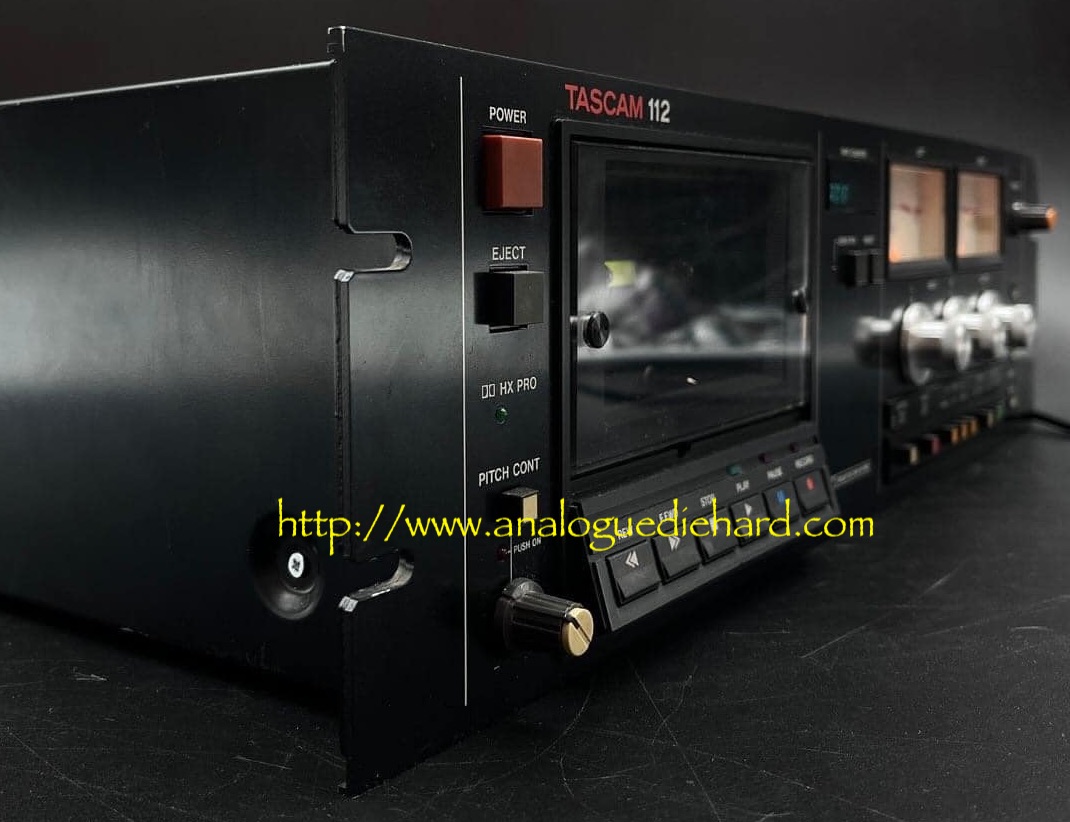
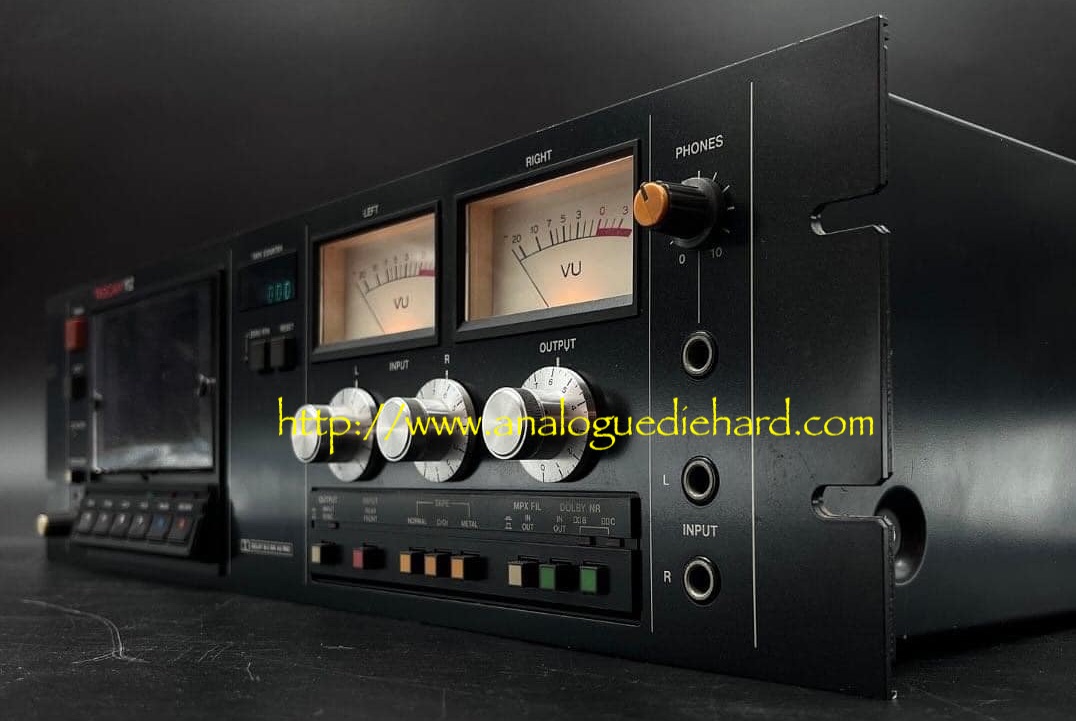
After I acquired my Tascam 246 Portastudio I purchased this 112
Master Cassette Deck to make stereo master recordings of my 246
projects. I opted for the 112B model which adds balanced (+)4dBm
level XLR inputs and outputs, for use in recording live
performances. In today's world of CDs and mp3s I no longer use the
112 for master recordings so it only sees use for archiving my
cassette tapes to digital audio.
The 112 is a rackmount professional quality cassette deck using
Dolby® B or C noise reduction and can accommodate normal, CrO2
(chrome dioxide), or metal magnetic tapes. Cassettes longer than 90
minutes are not recommended because the tape is thinner and can lead
to problems with breakage and/or wrinkling with the transport
system. Dolby® HX Pro dynamically adjusts the tape bias as a
function of high frequency content of the program material during
the recording process to eliminate "self bias" (modulation of a
fixed bias signal) - the benefit is more accurate reproduction of
high frequency content, no decoding process is needed on playback,
and the cassette can be played on any tape player that does not have
HX Pro.
The usual tape transport controls are included and a button
activated pitch control can vary the tape speed (+/-)12%. The
optional RC-71 extends
the transport control remotely over sixteen feet. A tape
displacement counter provides the only transport location control;
RESET sets the zero point at the desired location, and when ZERO RTN
is active (LED is on) the transport will stop at zero count after
rewinding. Inputs are 1/4" TS jacks on the front panel or rear panel
RCA jacks, both (-)10dBv. The inputs are line level with no gain for
microphones or passive string instruments. The headphone output will
work with 8ohm or 600ohm headphones. VU meters with peak LED display
the playback or recorded signal, and independent level controls for
left/right vary the input signal during recording. OUTPUT level
control affects the rear panel outputs and is independent of
headphone level setting. Bandwidth is respectable per tape type:
Normal
25hz to 17Khz (+/-)3dB at -20VU
CrO2
25hz to 18Khz (+/-)3dB at -20VU
Metal
25hz to 19Khz (+/-)3dB at -20VU
MPX Filter is only needed when making Dolby® recordings from FM
radio broadcasts. It eliminates the pilot 19Khz and subcarrier 38Khz
tones from the broadcast audio. If not engaged, the FM tones will
interfere with the operation of the noise reduction.
It has an erase head and a combination (not separate)
playback/record head. However a SYNC feature enhances
metering/headphone monitoring - source audio is tape during
playback, while source audio is input jacks during recording. With
SYNC active, holding both pause and either fast forward/rewind
button allows cueing of program material. There is no slow speed
"scrubbing" feature.
The noise reduction types vary. Type B is very common on economy
consumer level tape decks and automotive entertainment systems
(before modern "infotainment" consoles); Type C is less common but
improves the signal to noise ratio (78dB) by 10dB over Type B.
The 122 mkII is the same product with the extended location control
and user variable tape bias.
Two age related problems will occur with the tape-based recorders.
One is drive belts, which dry with age and will break. The other is
dry lubricant, which hardens and renders the tape transport
inoperative. If you encounter the latter issue, stop operating the
machine before the irreplaceable motors burn out and arrange for a
competent tech to restore operation. This is not a repair job for
the novice, and disassembly/assembly is complicated.
The playback and record heads can wear down with extended use
depending on the hours of operation; replacement heads are not
available. The tape heads have to be periodically "demagnetized" or
"degaussed" since they gradually accumulate magnetism as tape passes
over the heads. The excess magnetism affects fidelity. Degaussers
are still available but I highly recommend one that is a cassette
assembly that "plays" in the transport and automatically performs
the process.
NEVER use paint thinner, alcohol, benzine, or any other cleaner that
are not designed for any component in the path of the tape. The
wrong solvent will damage them beyond repair. Teac/Tascam no longer
offer cleaning solvents - I discourage acquiring NOS Teac cleaners
because the chemical contents change over time. Metal plated
components like tape heads and pins need a different cleaner from
the rubber pinch rollers. User rubber cleaner for the rubber
components. Some discussion forums suggest 99% isopropyl alcohol for
the metal plated components but that conflicts with the user manual
and professional industry guides.